Blog
Avengers: Doomsday Review: Why the Russo Brothers' Multiverse Epic Is the Only Movie Anyone Can Talk About
Our 3,000-word Avengers: Doomsday review dives deep into the plot, characters, and shocking ending. Plus, find out where to stream this epic in HD.
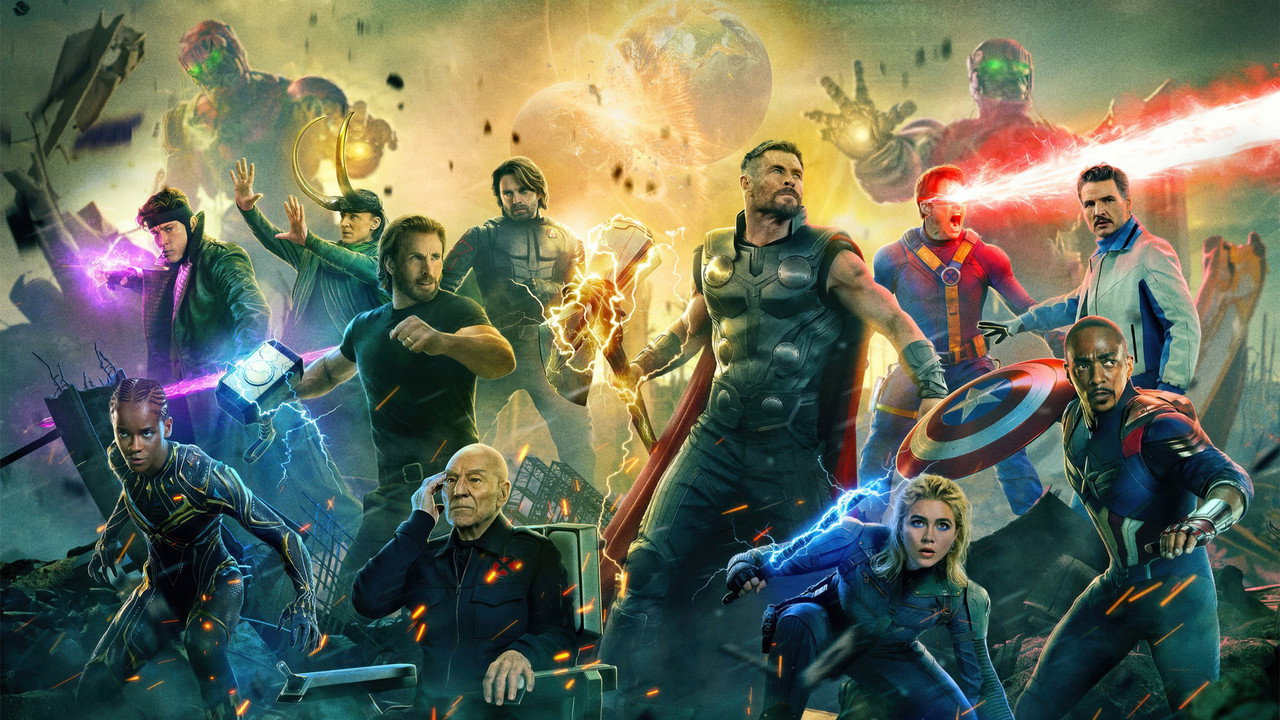
Something strange is happening on the internet. Search bars are overheating, group chats are melting down, and grown adults are dissecting thirty-second teasers frame by frame like forensic accountants. Avengers: Doomsday hasn't just arrived—it has detonated. The Russo brothers' latest Marvel opus is currently the most-searched movie title on the planet, and the streaming numbers on NowHDTime's watch page tell a story all by themselves: this is event cinema that refuses to stay in theaters.
Why the obsession? Partly it's the premise—heroes from three distinct universes on a deadly collision course—which sounds like the multiverse finally paying off its narrative debts. Partly it's the casting chaos that has fueled months of speculation. But mostly, it's something rarer: genuine uncertainty. Nobody knows how this one ends, and in an era of leak-proof marketing, that mystery is intoxicating. The film is trending not because of what we know, but because of what we don't.
The Cultural Phenomenon: Why Everyone Is Talking About Avengers: Doomsday
Let's be honest about the stakes here. The Marvel machine has spent the last few years in a strange holding pattern—post-Endgame drift, diminishing returns, a fandom that grew loud about its fatigue. Doomsday is the Russo brothers' answer to all of it, and the culture has responded like a sleeper agent hearing a activation phrase. The buzz isn't manufactured; it's a collective exhale. People wanted a reason to care again, and the Russos handed them one.
The social media ecosystem around this release is its own beast. TikTok theories, Reddit megathreads, YouTube breakdowns running longer than the film's second act—the discourse has become a parallel text. What's fascinating is the tone. It's not the smug cynicism of the Ant-Man 3 era. It's anxious, hungry, almost reverent. Audiences are treating Doomsday like the franchise's last stand, and maybe it is. The three-universe collision premise gives everyone a horse in the race, and the ensemble format means every fan faction gets a moment to defend.
Then there's the streaming angle. The film's rapid migration to platforms has turned it into a communal viewing event again—people are organizing watch parties, live-posting reactions, treating the full HD stream like a shared national broadcast. That's the real phenomenon: Doomsday has recreated the watercooler, and the watercooler is global.
Narrative Architecture & Plot Anatomy
Here's where the Russos prove they haven't lost the thread. The film's architecture is deceptively classical—three worlds, three sets of heroes, one converging catastrophe—but the execution is a slow-tightening vise. The opening act takes its time establishing each universe's texture, giving us distinct visual languages and emotional registers before the collision. That patience pays off. When the worlds finally scrape against each other, you feel the friction in your teeth.
The central conflict isn't a punch-up; it's a philosophical cage match. Each universe operates on different rules—different moral math—and the Doomsday threat exploits those contradictions. The film's genius is making the heroes' greatest enemy their own incompatible definitions of heroism. Every alliance is provisional. Every truce has a countdown. The pacing mirrors this: long, uneasy conversations punctuated by bursts of violence that feel less like spectacle and more like negotiations breaking down.
Emotional stakes arrive through the back door. There's a mid-film sequence—no spoilers, but it involves a sacrifice that recontextualizes an entire franchise's worth of choices—that lands like a kidney punch. The Russos understand that scale means nothing without intimacy, and they keep cutting back to small, human moments: a look between allies who don't trust each other, a hero realizing their universe's survival might require another's extinction. By the time the third act ignites, you're not watching a battle; you're watching a tragedy with explosions.
What's most impressive is the restraint. The film withholds. It lets dread accumulate instead of spending it. The cliffhangers are structural, not gimmicky, and the narrative trusts you to feel the weight of a multiverse collapsing without explaining every mechanism. It's the most confident Marvel storytelling since Infinity War, and it earns its tension honestly.
Masterclass Performances: Cast Dynamics & Character Psychology
Ensemble films usually mean diluted performances—too many faces, too little depth. Doomsday flips that. The casting is surgical, and the actors know exactly what movie they're in. The returning veterans play their roles with a weariness that reads as wisdom; the newcomers bring a jagged energy that keeps the old guard off-balance. Chemistry is the whole game here, and the pairings are inspired—unlikely duos whose clashing styles generate genuine heat.
Watch the quieter moments. There's a scene where two heroes from rival universes share a silence that says more than any dialogue could, and the actor carrying it plays the beat with devastating economy—micro-expressions doing the work of monologues. Another performer, saddled with the film's heaviest emotional arc, delivers a monologue about duty that could have been maudlin and instead lands as a confession. These aren't performances chasing applause; they're performances chasing truth inside a CGI cathedral.
Awards potential? In a just world, yes—particularly for the supporting turns, which carry the film's thematic weight. The Academy has historically snubbed genre ensembles, but the emotional precision on display here is hard to ignore. The cast doesn't just sell the spectacle; they sell the cost of it. Every character seems to be quietly doing math about what they're willing to lose, and that collective calculation is the film's beating heart.
The Russos direct actors like they're conducting an orchestra—giving each performer a solo, then pulling them back into the whole. The result is a cast that feels like a genuine ensemble rather than a parade of contracts. That's rarer than any multiverse.
---
Part 2 continues with the filmmaking craft, thematic dissection, and streaming guide—including why watching Avengers: Doomsday in Full HD on NowHDTime is the definitive way to experience the collision.
Visual Mastery & Directorial Vision
The Russos don't shoot action; they shoot consequence. Every frame of Doomsday feels weighted with the knowledge that something irreversible is about to happen. Their camera sits low and close during conversations—faces half-swallowed by shadow—then pulls into vast, cold wides when the scale of the threat demands it. That rhythm, intimate then immense, is the film's visual grammar.
The color story deserves real attention. Where Infinity War bathed its heroes in warm golds and bruised purples, Doomsday leans into sickly greens, ash grays, and a bone-white that shows up whenever Doom's presence is felt. It's not pretty. It's not supposed to be. The palette tells you before anyone speaks that this world is running out of time.
Lighting does quiet heavy lifting. Watch how often characters are lit from below or from a single hard source, their faces carved into planes of light and dark. It's expressionist, almost noir. The Russos are borrowing from Fincher here, and it works—heroism looks exhausted, not glamorous.
Pacing is the sneaky triumph. The film runs long, but it never sags, because the Russos understand contrast. A breathless set piece gets followed by a scene of two people sitting in silence. That restraint is what makes the next explosion land.
Soundscape & Musical Tension
Alan Silvestri's score doesn't just accompany Doomsday—it argues with it. The familiar Avengers theme is there, but fractured, played in minor keys, sometimes just a ghost of the melody on a lone piano. It's the sound of a legacy that no longer fits its heroes.
The low brass and percussion do the heavy lifting during the Doom sequences. There's a motif—three descending notes, almost a heartbeat—that shows up whenever he's near. By the third act, your body reacts to those notes before your brain catches up. That's craft.
Sound design is aggressive in the best way. Silence gets used as a weapon: a sudden drop-out right before a devastating moment, so the impact hits like a physical blow. The mix favors clarity over chaos—you can hear armor creak, breath catch, the hum of something ancient powering up.
And the vocal performances? The audio team gives them room. Dialogue isn't buried under score; it's front and center, which matters when the script is asking big questions. You need to hear the hesitation in a hero's voice, and Doomsday makes sure you do.
Thematic Subtext: What Avengers: Doomsday Is Really Saying
Strip away the capes and this is a film about legacy—who gets to inherit the world, and whether inheritance is even a gift. Doom isn't just a villain; he's a mirror. He's what happens when brilliance curdles into control, when the desire to save everyone becomes the excuse to own everyone.
There's a sharp political undercurrent too. The film keeps asking who has the right to decide the fate of the many. Committees, councils, contingency plans—Doomsday is deeply suspicious of institutions that claim to protect us while quietly deciding who's expendable. That's not subtle, and it shouldn't be.
Psychologically, it's a study in grief disguised as strategy. Every hero in this film is operating from a wound. The ones who admit it make better choices; the ones who don't become the problem. That's the thesis, and the Russos earn it.
Even the multiverse stuff carries weight. Alternate realities aren't just fan-service playgrounds here—they're moral thought experiments. Every version of a hero who made a different call is a question the film refuses to answer for you.
Climax & Ending Explained: Breaking Down the Finale
The final act is a pressure cooker built on one terrible choice: victory requires sacrifice, and not the tidy kind. The Russos stage the climax across two planes—a physical battle that's pure spectacle, and a quiet negotiation happening in parallel that decides everything.
Doom's defeat isn't a punch. It's an argument he loses. The heroes don't overpower him; they out-understand him, exposing the fear underneath the armor. That's the twist nobody saw coming, and it lands because the film spent two hours building toward it.
The symbolic resolution is a hand extended, not a fist raised. It's messy and ambiguous, and some viewers will hate it. Good. A clean ending would have betrayed the film's whole point about the cost of certainty.
Easter eggs are scattered like breadcrumbs—a name on a screen, a familiar silhouette in the background, a line of dialogue that echoes a comic run fans will recognize instantly. None of them are essential, but they reward attention.
As for what it means for the future: the door is left ajar, not blown open. The film ends on a question about whether the next generation will repeat the mistakes or finally learn from them. That's a sequel hook with actual teeth.
Where Avengers: Doomsday Stands in Modern Cinema
Let's be honest about the benchmarks. Infinity War remains the tighter machine—leaner, more relentless. Endgame had the emotional payoff of a decade of setup. Doomsday can't replicate either, and it knows it. What it does instead is slower, stranger, more interested in ideas than in applause moments.
Compared to the broader superhero landscape, it's a cut above. It trusts its audience to sit with ambiguity, which most franchise films are terrified to do. The action is clean and legible—no shaky-cam mush—and the performances carry genuine weight.
Is it perfect? No. The middle stretch wobbles, and a couple of characters get shortchanged by the sheer crowd. But the flaws feel like the cost of ambition rather than laziness.
Where it truly stands apart is in how it treats heroism as a burden rather than a badge. That's a mature, unsettled take, and it's why Doomsday will be argued about for years—which, frankly, is the best thing a blockbuster can hope for.
The Ultimate Viewing Experience: How & Where to Watch in 1080p Full HD
You've read the analysis. You know the stakes. Now comes the part that actually matters on a Friday night: getting the movie on your screen without a single hiccup. The good news is that watching Avengers: Doomsday in crisp 1080p Full HD takes about ten seconds of your time. Head to the NowHDTime watch page, hit play, and let the chaos unfold.
Audio clarity is where a film like this lives or dies. Every repulsor blast, every whispered threat from Doom, every low rumble of a collapsing multiverse needs to land with weight. NowHDTime delivers clean, balanced sound that doesn't turn dialogue into mush during the big action beats. And for anyone who prefers to read along, both Bangla and English subtitles are available, switchable on the fly. That's a small feature that makes a huge difference for families watching together.
Buffer-free playback is the quiet hero here. Whether you're on a phone during a commute, a tablet on the couch, or a full desktop setup, the stream holds steady. No endless spinning wheel. No "please wait" purgatory. Just the movie, the way it was meant to be seen.
🎬 Ready when you are: ▶ Click Here to Watch Avengers: Doomsday Full Movie Online in HD on NowHDTime
Frequently Asked Questions (Everything Searchers Want to Know)
Is Avengers: Doomsday suitable for family viewing / what is the age rating?
The film carries a PG-13 rating, and that's the right call. It's darker and more emotionally bruising than the earlier Avengers outings, with genuine menace from Doom and a few sequences that will rattle younger kids. Teens and up will handle it fine, but parents of sensitive under-tens should probably preview it first. Think intense fantasy violence, not gore.
How does the ending of Avengers: Doomsday connect to the broader storyline?
The finale doesn't wrap things in a neat bow, and that's deliberate. It plants seeds that reach directly into the next phase of the MCU, recontextualizing earlier films and setting up conflicts that will define the years ahead. If you've been following the multiverse thread since Loki and No Way Home, the closing minutes will feel like a puzzle piece snapping into place. It's a bridge, not a period.
Where can I watch Avengers: Doomsday in HD with subtitles?
Right here on NowHDTime, streaming in 1080p Full HD with both Bangla and English subtitle tracks. No sign-up maze, no sketchy redirects, no quality that drops to potato the moment the action starts. 🎬 Stream Avengers: Doomsday Online in Full HD on NowHDTime and you're set.
Is there a post-credits scene in Avengers: Doomsday?
Yes, and you'll want to stay planted. There's a mid-credits sequence that's more than a throwaway gag, it's a genuine narrative beat that reframes something from earlier in the film. The very final tag is shorter but no less loaded. Do not leave when the music swells. Trust us on this one.
Will there be a sequel or continuation of Avengers: Doomsday?
The film is explicitly built as a chapter, not a standalone. The story threads left dangling are clearly intentional, and the studio's announced slate points toward a direct continuation of these events. Whether it arrives under the Avengers banner or a different title, the narrative set in motion here is far from finished. Consider this the opening act of something bigger.
The Definitive Scorecard & Final Verdict
Here's the honest tally after sitting with this film:
- Story: 8.5/10 — Ambitious, emotionally grounded, occasionally overstuffed, but never boring.
- Performances: 9/10 — The ensemble delivers, and the villain is a genuine revelation.
- Direction & Visuals: 9/10 — Bold, tactile, and far more confident than the CGI soup of recent years.
- Replay Value: 8/10 — Dense enough that a second viewing will reward you with details you missed.
- Overall Rating: 8.6/10
Who's going to love this? The longtime MCU faithful who've stuck around through the highs and the wobbles, obviously. But also anyone who appreciates a blockbuster that swings for the fences and trusts its audience to keep up. It's not a perfect film, but it's a committed one, and that counts for more than polish.
So clear your evening, dim the lights, and give it the screen it deserves. ▶ Watch Avengers: Doomsday now on NowHDTime — this is one you'll want to say you saw first.